
How does this method work?
A website is not a revenue model in itself; can find customers for the service, sell products, offer memberships or engage in publishing. First define what task the visitor will complete. The success of a site that wants to collect contact requests is measured by qualified applications and sales rather than page views. Putting different revenue models on a single page can make the visitor's decision difficult.
Evaluation with a concrete example
For example, let's say 20 requests come from 1,000 interested visitors per month, resulting in four sales. Demand conversion is 2 percent and sales from demand is 20 percent. Before changing the site, isolate which phase is problematic. Receiving a large number of irrelevant visitors does not produce the same economic result as finding a small number of correct customers. These rates are calculation examples, not industry standards.
Your first application: what should you have?
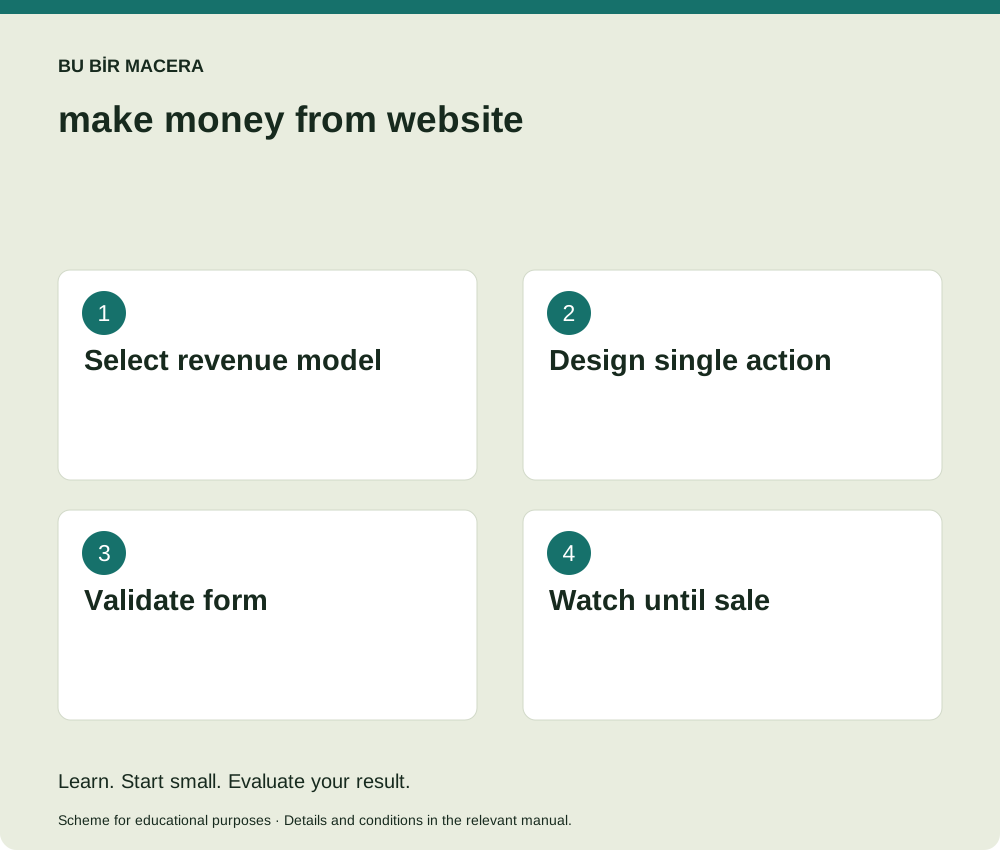
Choose one main action: request a quote, buy the product, or join the helpful newsletter. Test that the form works on mobile, that the success message is received, and that the request actually arrives. Establish privacy disclosure and required consent processes. Show visits, requests, accepted work and collections separately in your first report; Don't explain success solely by increasing traffic.
- Select revenue model
- Design single action
- Validate form
- Watch until sale
Vehicle selection and actual starting cost
You don't need an expensive tech stack to start with. Search Console, analytics, and speed testing are enough to set up most basic flows. Email provides process order; and the payment infrastructure helps record the results. Switching to a paid tool only when you see that the free option creates a tangible bottleneck preserves cash flow, especially before revenue is generated.
The most important criterion in choosing a tool is not popularity, but reducing friction in the workflow. A tool might make sense if it saves you two hours a week or significantly improves the quality of delivery. On the other hand, software, equipment or subscriptions purchased just to look professional may not produce a return. Write down the monthly cost of each paid tool and the time it saves you.
By what indicators should one evaluate the result?
In this study, follow the result, not just the movement. Let your first indicator be “organic traffic” and the complementary indicator be “lead conversion rate”. The recovery of one does not mean that the other has also recovered. Proceed by comparing similar jobs with the same date range, same calculation format. State what changes you made to the record and when; so you can investigate why the result may have changed.
Changing the entire plan based on one good day or exceptional result. At the end of the essay, explain in a brief note what you kept, what you fixed, and what you let go. Do not write about a result that you cannot measure as if it happened. In revenue-related studies, keep collection and turnover separate, and in growth studies, keep access and real interest separate. A few reliable records needed to choose the next step are more useful than one large report that is never used.
- organic traffic
- lead conversion rate
- income/visitors
- email registration rate
- revisit
Frequently asked questions
What study should I complete initially?
Choose one main action: request a quote, buy the product, or join the helpful newsletter. Test that the form works on mobile, that the success message is received, and that the request actually arrives. Establish privacy disclosure and required consent processes. Show visits, requests, accepted work and collections separately in your first report; Don't explain success solely by increasing traffic.
How soon can I get results?
There is no fixed term or income guarantee. The needs of the target audience, your skills, resources and application determine the result. Complete the concrete output in the article on the first try; Make your decision to move forward with real feedback and cost.
Resources and current conditions
Platform rules and legislation are subject to change. The calculation and application examples on the page are for educational purposes only; Please also check the relevant conditions from the official sources below.