
How does this method work?
In e-commerce, the difference between the buying and selling price of the product is not a direct profit. Commission, payment expense, shipping, packaging, return, damage and advertising costs are also covered from the same order. First calculate the economics of a single product; Expanding the store does not make the losing product profitable. Evaluate demand, supply reliability and legal product conditions together.
Evaluation with a concrete example
If the hypothetical 1,000 TRY net sales the product is 450 TRY, delivery and packaging is 100 TRY, commission is 120 TRY, expected return margin is 50 TRY, the pre-advertisement remains 280 TRY. When customer acquisition expense is 300 TRY, minus 20 TRY per sale; Fixed expenses are not yet included. This example shows why a high turnover display is not evidence of profitability.
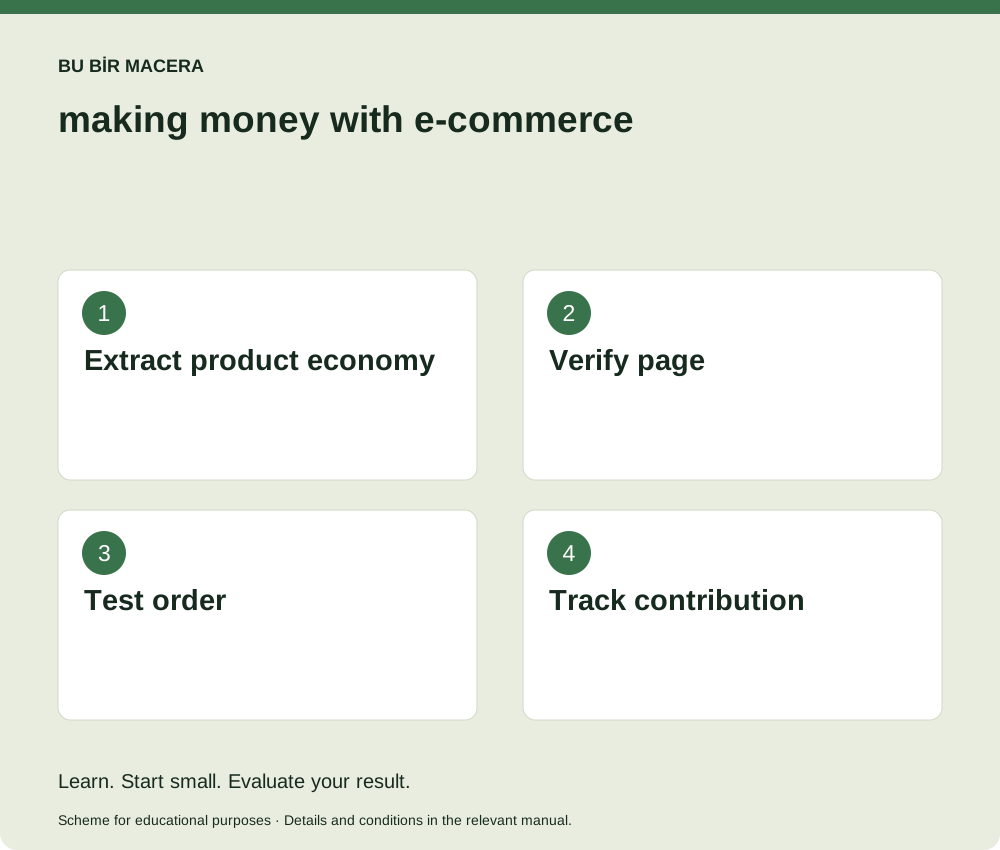
Your first application: what should you have?
Start with a small selection of products and provide actual size, material, usage and delivery information on the product page. Test mobile payment flow, stock count and order notification. Include returns and customer support in your cost plan. The output is a publish-ready product page and spreadsheet showing the actual contribution of each order.