How does this method work?
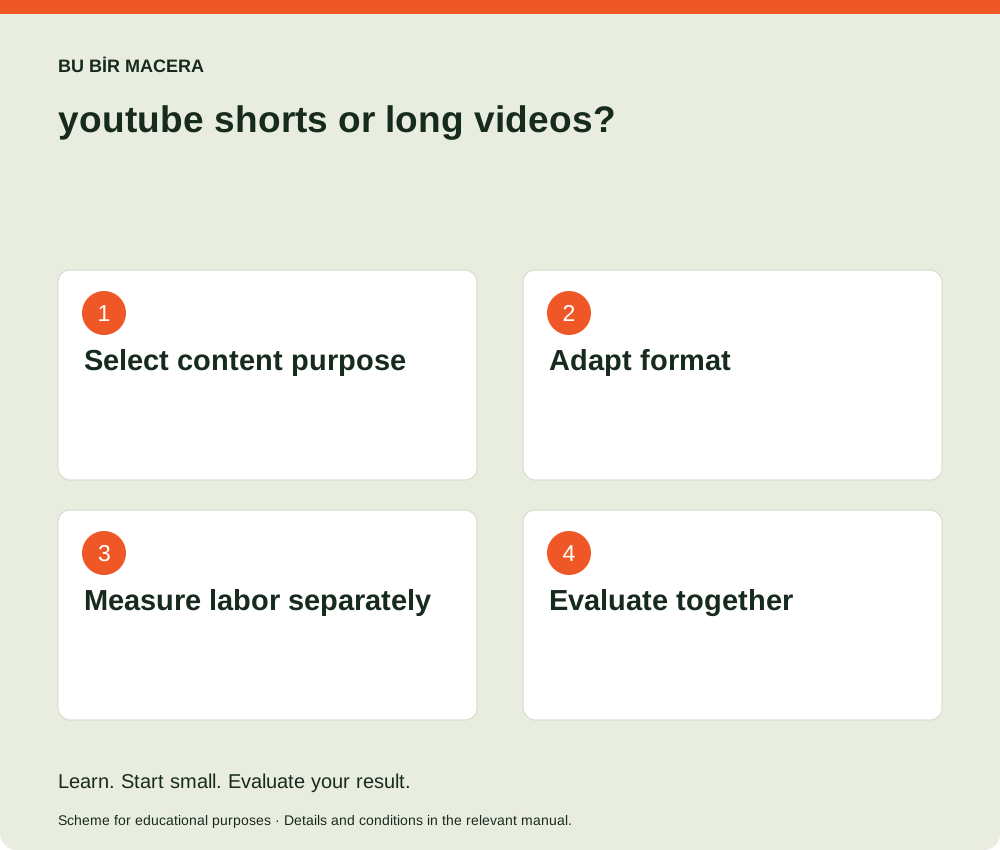
Shorts and long-form video serve different narrative and audience needs. The short format may be suitable for a single idea or quick observation; long format offers more room for description, process, and story. There is no single answer to which format brings in more money. Channel target, production cost, and actual audience behavior must be evaluated together.
Evaluation with a concrete example
You can explain the only critical clue of a route with Shorts, and show transportation and the entire experience in a long video. But don't assume that the short video viewer will automatically switch to the longer video. Although it is possible to produce the two formats from the same raw image, introduction, rhythm and framing need to be rethought. Cutting long video randomly does not always produce good short content.
Your first application: what should you have?
Plan two full-length chapters and four original short pieces on the same topic family. Record labor time, audience response, and intended outcome separately for each format. Don't compare raw view count only, as revenue definitions and viewing metrics may differ. The output is a balanced production plan that explains which format will handle which task.